PHNOM PENH, May 16 (Xinhua) -- The China-proposed Belt and Road Initiative creates huge opportunities for Cambodia to develop and catch up with other countries in the Asia-Pacific region, especially in attracting more foreign investment, a Cambodian scholar has said.
"Cambodia stands to benefit more from Chinese investment in infrastructure such as roads, rail, ports and hydropower plants which will increase significantly in the coming years," Chheang Vannarith, chairman of the Cambodian Institute for Strategic Studies, was quoted by the Khmer Times newspaper as saying on Tuesday.
Cambodia believes the initiative would boost infrastructure development and increase economic opportunities, he said.
The scope of the project will help realize Cambodia's development strategy such as the Rectangular Strategy and Industrial Development Policy (2015-2025), the scholar added.
"The Belt and Road Initiative will also contribute to the realization of the vision of becoming a middle-income country by 2030 and a high-income country by 2050," Vannarith said.
He added that Cambodia needs about 600 million U.S. dollars in infrastructure development and logistic networks annually to maintain the momentum of economic development and enhance its competitiveness.
Logistics in Cambodia is less developed compared with other nations of the Association of Southeast Asian Nations (ASEAN) due to the lack of a reliable network of transportation, telecommunications, warehousing and other related infrastructure, he said.
Another key constraint in attracting foreign direct investment in Cambodia is the cost of electricity which is higher than in neighboring Laos, Thailand and Vietnam, he added.
Vannarith says the Belt and Road Initiative is emerging as a key factor shaping the world's economic order, with emphasis on an open and inclusive international economic system.
"China is the fulcrum of an evolving global economic architecture," he said. "It is the leading force against de-globalization that is driven by reemerging populism and protectionism."
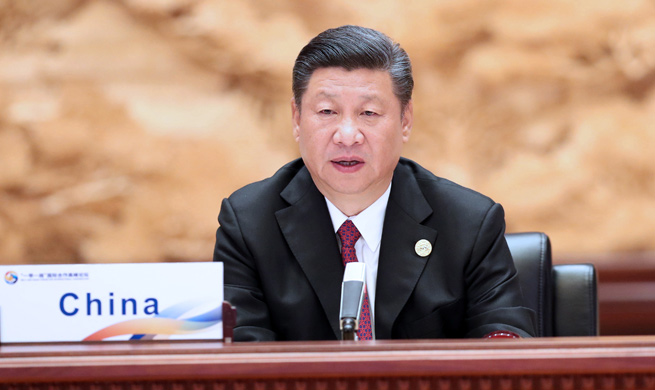
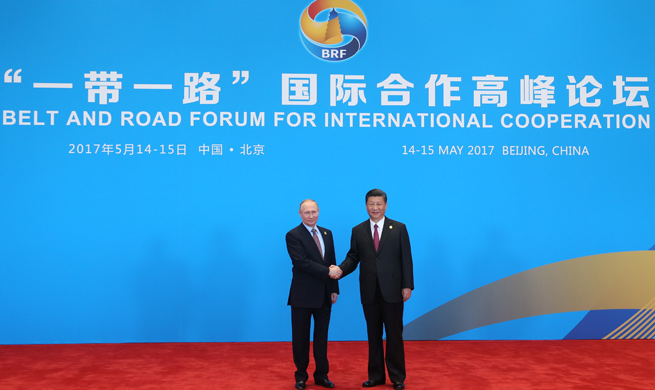
The two-day Belt and Road forum has been concluded in Beijing with a collective commitment from all participating countries to deliver more concrete results through policy coordination and practical cooperation.
Peace, prosperity, opening up, innovation and connecting different civilizations are the five objectives of the initiative, he said, adding that mutual understanding and trust-building are the foundations of it.
"All countries are expected to greatly benefit from the Belt and Road Initiative through policy cooperation and practical projects," Vannarith said. "The Belt and Road Initiative is compatible with and complementary to the UN Sustainable Development Goals 2030."
The initiative was proposed by Chinese President Xi Jinping in 2013 with an aim to build trade and infrastructure networks connecting Asia with Europe and Africa along the ancient Silk Road routes. It comprises the Silk Road Economic Belt and the 21st Century Maritime Silk Road.